
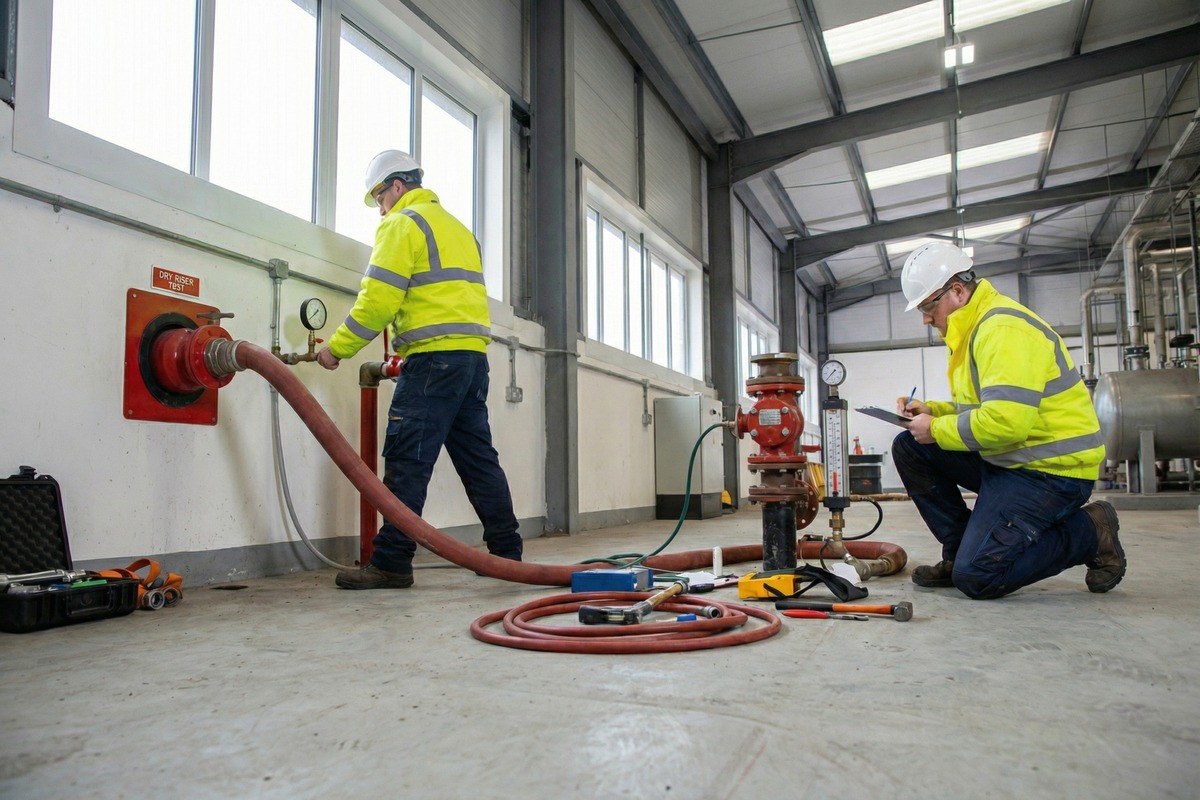
C & H Fire Protection supports dry and wet riser maintenance for facilities teams, property managers and contractors across Essex, London and the South East. A useful starting point is the previous service report, the system information and any known defects.
Routine inspection, testing, maintenance and remedial work should have clearly defined scopes. New systems and alterations are a separate project: see dry and wet riser installation. Agree responsibilities and site arrangements before booking work on an occupied building.
Plan the visit around the actual system
Share the site address, system type, available drawings, previous reports and details of outstanding defects. Identify the person coordinating access, the areas engineers need to reach and any restrictions on working or testing hours.

Access and testing arrangements
Agree access to the relevant system components and any plant areas with the site team. Ask what the testing will involve, how occupants will be informed and who will manage any necessary temporary arrangements.

Reports and defect follow-up
Confirm which inspection and test records are included, how defects or inaccessible areas will be recorded and whether remedial works are included or quoted separately. Name the person responsible for receiving and acting on the findings.
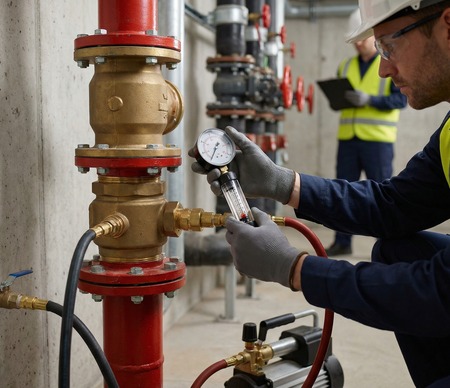
If your records are incomplete, say so when requesting a quote. A maintenance visit should not be priced on an assumed system layout or treated as a substitute for an agreed inspection and testing programme.
Standards context and maintenance records
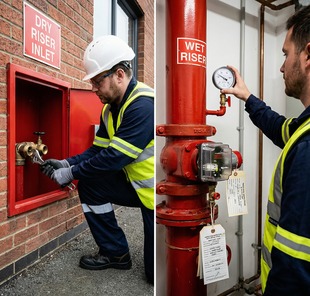
BS 9990 covers non-automatic fire-fighting systems in buildings, including wet and dry fire-fighting mains. BSI's BS 9990 overview describes its design, installation, testing and maintenance scope. Confirm the applicable edition, specification and maintenance arrangements for your system with a competent specialist. Keep visit records and unresolved findings alongside your wider fire-system maintenance records.
- Agree the inspection and test scope, access arrangements, exclusions and report recipient before the visit.
- Record defects and limitations clearly, assign follow-up responsibility and retain evidence of any subsequent work.

Maintenance planning
Keep testing, findings and remedial responsibilities clearly separated.
BS 9990
Confirm the relevant requirements for your riser system.




Share your previous riser report, site details and access requirements when you request a maintenance quote.
Comparing dry or wet riser testing quotations? State the system type, number of risers and outlets if known, previous findings, access restrictions and any pump or water-supply equipment relevant to the scope. Ask what the test and report cover and whether remedial works are separate. Use our maintenance-visit checklist, then request a riser testing and maintenance quote.
Riser Maintenance Questions
Send the site address, system type, available drawings, previous reports and known defects. Include access arrangements, working-hour restrictions and the name of the person coordinating the visit.
Confirm the appropriate programme with a competent specialist using the applicable standard, system requirements and site arrangements. This page does not prescribe one interval for every system or replace project-specific advice.
No. Inspection and testing of an existing system differ from installation or alteration works. Use our dry and wet riser installation service for new work. Ask the quotation to separate the test, reporting and any remedial work, with responsibilities and exclusions stated.
Discuss occupancy, access and testing restrictions before booking. The site team and contractor should agree communications, working arrangements and responsibility for any temporary measures required for the work.
Do not assume all repairs are included. Ask the quotation to distinguish inspection and testing from remedial works, explain how findings will be reported and state how additional work would be agreed.
Keep it with the site's system records and pass findings to the person responsible for follow-up. Check exclusions and outstanding defects as well as completed tests; a report alone does not resolve a defect.